
Why smart-card cold storage finally feels like the pragmatic future of private key protection
Whoa! So I was staring at my wallet the other day. Digital keys were on my mind, and the usual dread crawled in. My instinct said there had to be a better way than scribbling seed phrases in a drawer or trusting a random app that might vanish. Initially I thought cold storage meant paper and freezers, but now smartcards change that model.
Seriously? Private keys are brutally simple and dangerously fragile at the same time. One leaked phrase, one misplaced backup, and poof—your holdings can evaporate. On one hand you can go full paranoid with multisig and geographically distributed backups, though actually for most users that approach is overkill and clumsy. On the other hand, a well-designed hardware smart-card can provide a realistic balance between security and everyday usability, letting you sign transactions without exposing private keys to your phone or computer.
Hmm… I tried a few options myself, from cold air-gapped laptops to tiny USB sticks. It was messy and sometimes felt like over-engineering for daily use. I’ll be honest—there’s a sweet spot where security meets convenience, and somethin’ about contactless smart-cards hit that for me because they act like a physical key you can misplace, but not leak from a screen. (oh, and by the way…) This part bugs me: people assume a hardware device is automatically safe, but device provenance, firmware updates, and user workflows all matter a lot.
Practical security: what smart-cards actually change
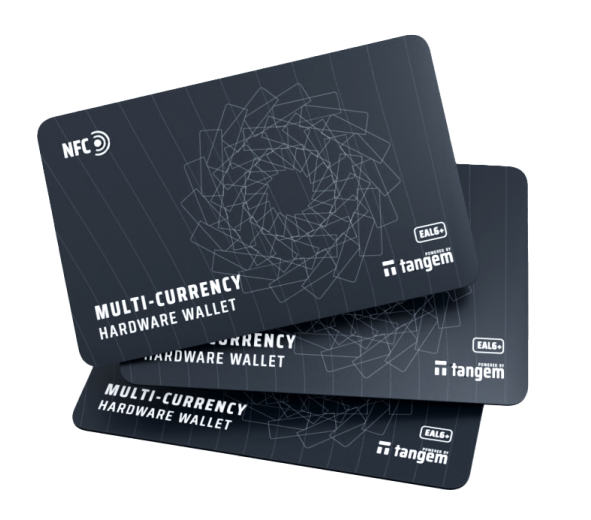
Wow! Check this out—I’ve used a smart-card wallet that stores keys on the card. Products like tangem offer tamper-resistant cards that talk over NFC and never expose private keys. Technically, the cards use secure elements and signed firmware to isolate keys. I’m biased, but for many people this is the closest thing to a practical, pocket-friendly cold storage without burying yourself in SOPs.
Really? Backup strategy still needs attention though. A seedless card model shifts the problem: you must have an off-card recovery plan or rely on the vendor’s recovery options. Initially I thought vendor recovery sounded risky, but after testing their protection layers and redundancy approaches, I found some vendors implement recovery with multipart thresholds that are reasonably secure if you follow their protocols. On the flip side, DIY seed backups are simple and agnostic, yet they invite human error and the classic “I’ll do it later” procrastination that costs people millions.
Whoa! Threat modeling is the boring part, but it’s where you save yourself grief later. Think about your real risks: theft, coercion, malware, supply-chain tampering, and even careless social posts. For high-value holdings I still recommend layered defenses—hardware smart-card for daily signing, a multisig vault for long-term storage, and offline documentation stored separately—though actually the simplest improvement for most is replacing fragile paper seeds with ruggedized smart-cards and proper backup discipline. My instinct said start small, automate what you can, and never trust any single device entirely.
Wow! I know that sounds like a lot. The reality is plain: usability wins security adoption. If a security model is too cumbersome, people will shortcut it and create worse failure modes, very very often. So design matters: ergonomics, recovery UX, and a clear owner mental model reduce mistakes and social engineering exposure. In practice, trust should be conditional and layered rather than absolute.
FAQ
Can a smart-card be stolen and drained?
Yes, physical theft is possible, though a properly designed card keeps keys inaccessible without the card itself and the user’s PIN or biometric unlock, reducing remote-exploit risk; for high value accounts you should add a multisig or delay+notification scheme to prevent immediate draining.
What about vendor lock-in or recovery dependence?
Some smart-card solutions use vendor-assisted recovery; that introduces a trust tradeoff, so read the recovery architecture carefully—ideally it’s thresholded, auditable, and requires multiple independent parties to act, but if you prefer full vendor-agnostic control, stick with seed-based or open multisig approaches.