
Why Rabby Might Be the Ethereum Extension Wallet You Actually Use
Whoa! Crypto wallets feel like a hundred small decisions stacked on top of each other. Really. One wrong click and you lose hours, or worse, funds. My first impression was: another browser wallet? Hmm… but then the details started to matter. Initially I thought Rabby was just another MetaMask-style extension, but after pulling specs, reading user notes, and testing flows in a sandboxed setup, it began to look different—less flashy, and more focused on real DeFi friction points.
Here’s the thing. Most people pick a wallet by reputation or habit. They don’t always notice the UX choices that quietly prevent mistakes. Rabby aims to make those choices explicit. It offers clearer transaction previews, easier network switching, and integrated token approvals visibility. Those features sound small on paper. Though actually, they change how often you click “confirm” without thinking.
Short version: it’s practical. Long version: the extension walks a middle line between advanced DeFi power and everyday safety, which is exactly what a lot of folks need when juggling multiple chains and yield farms.
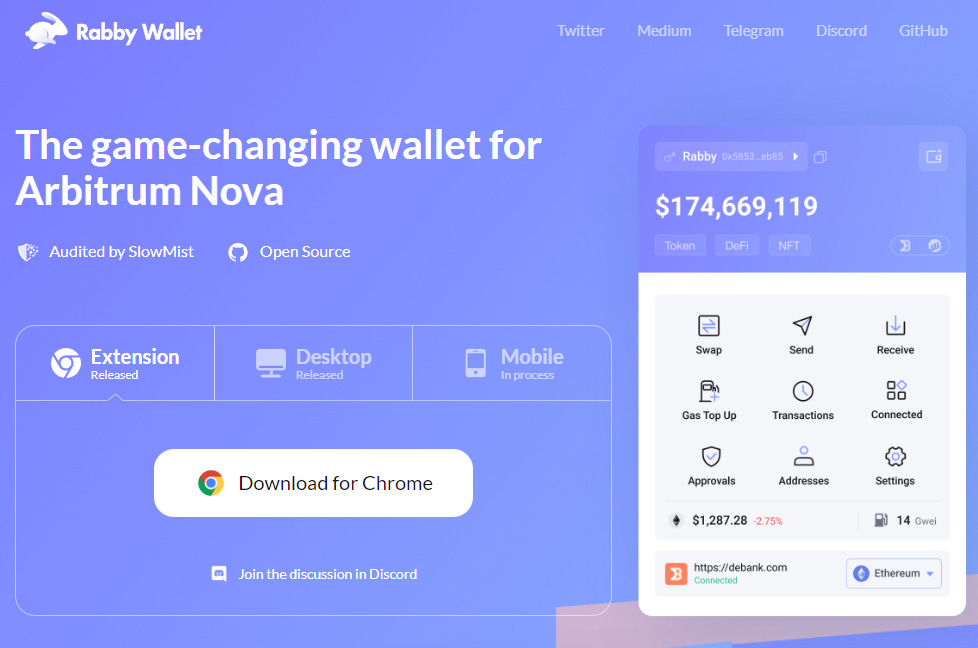
What sets Rabby apart
People often say “security” as if it’s one thing. But security is a set of design decisions. Rabby focuses on a few of them that matter in browser extensions. For example, it gives you a clearer token approval history, so you can see which contracts have unlimited access to your tokens and revoke them without hunting through Etherscan. That alone cuts risk. Seriously?
Yes. And there’s more: gas-fee presets that actually reflect network conditions, better nonce handling for complex DeFi strategies, and a more granular account grouping model so you can separate funds logically across use cases. On one hand these are just features. On the other hand they reduce cognitive load when you have 10 tabs open, a swap pending, and the gas price spikes.
My instinct said “it’s for power users,” but then I noticed the onboarding is approachable—default settings are sensible, and prompts explain consequences rather than assuming prior knowledge. Actually, wait—let me rephrase that: it’s accessible without being dumbed down, which is rare.
Also: the UX nudges are helpful. Little confirmations, clearer contract names (when available), and more visible warnings. Those tiny things save the “oh no” moments. I’m biased, but this part bugs me about most wallets—they hide important context behind cryptic raw hex. Rabby tries to surface that context.
Practical features I pay attention to
First, token approvals. Lots of hacks happen because users approve unlimited allowances and forget them. Rabby’s approvals UI puts those allowances front-and-center. You can revoke or set limits in a few clicks. It’s not perfect, but it’s way better than digging through a block explorer.
Second, transaction previews. Many extensions show raw calldata and expect you to parse it. Rabby attempts to decode common interactions and show human-readable actions. That reduces reckless confirms. Sometimes it gets names wrong—contract naming on-chain is messy—but when it’s right, it’s gold.
Third, multi-chain support. If you’re hopping between Ethereum L1, testnets, and EVM-compatible chains, the extension keeps things organized and warns when you switch networks. That prevents the classic “I just signed a thing on the wrong chain” mistake. Of course, automatic detection isn’t perfect, so stay cautious.
Fourth, UX for advanced flows. For power traders who queue transactions or use custom nonces, the wallet doesn’t accidentally stomp on pending txs. That’s a niche need, but for anyone doing DeFi strategies it’s important. Not many browser wallets handle this gracefully.
Privacy and data considerations
Browser wallets inherently expose some metadata—your address, the sites you connect to, and when you sign. Rabby doesn’t pretend otherwise. It minimizes additional telemetry by design, and the extension model keeps secrets local. Still, every extension is surface area, so limit permissions and keep extensions you trust only. A tiny note: use hardware wallets for large sums (Ledger, Trezor) and pair them through the extension when you can.
Something felt off about blanket extension permissions for years. My takeaway: use Rabby for day-to-day DeFi and pair it with a cold wallet for vault-level security. It’s a practical compromise rather than a silver-bullet solution.
How to get started (safely)
Okay, so check this out—if you want to try it, go to the official download page and follow the browser-specific installer. For convenience, here’s the official source where you can download rabby. Do verify the extension’s publisher and checksum if you’re extra paranoid. Also, create a seed phrase backup offline and never share it with anyone. Some folks store seeds on a password manager; others prefer a steel plate. Neither is flawless—choose based on your threat model.
Tip: set up a small test account first. Move a tiny amount, try an approval, then revoke it. You learn more from a $5 test than a $500 mistake. (Oh, and by the way… keep your browser updated.)
Another practical tip: use separate browser profiles for high-risk activities. It sounds like overkill but it’s simple to set up and reduces cross-site leakage if an extension or tab misbehaves.
Common negatives (what to watch out for)
No wallet is perfect, and Rabby is no exception. At times the UI can be terse, and some contract names or token metadata are missing. It occasionally mis-parses custom contract interactions, leading to confusing previews. Also, the extension model always carries the same browser risks—malicious extensions, clipboard scrapers, or compromised device can ruin your day. So don’t treat an extension like a vault.
I’ll be honest: some of the advanced features feel like they target power users more than newcomers. That’s fine, but it means new users should spend an hour learning simple flows before moving large balances. I’m not 100% sure every user reads the prompts—many skip warnings—so the human factor remains the biggest risk.
FAQ
Is Rabby safer than MetaMask?
Safer is relative. Rabby focuses more on surfacing approvals and transaction context, which reduces common user mistakes. MetaMask has broader adoption and integrations. For many users, Rabby is complementary rather than a straight replacement.
Can I use Rabby with a hardware wallet?
Yes. Pairing with a Ledger or similar device is recommended for large holdings. Use the extension for everyday interactions and keep the cold wallet for long-term storage.
Where should I download it?
Always get it from the official source: rabby. Verify the publisher and reviews, and double-check checksums if available.